By: Steve Easley
Published May 21, 2026
Steve Easley is principal of Steve Easley Associates, a company based in Scottsdale, Ariz., that provides building-science consulting, training, and quality assurance for builders nationwide.
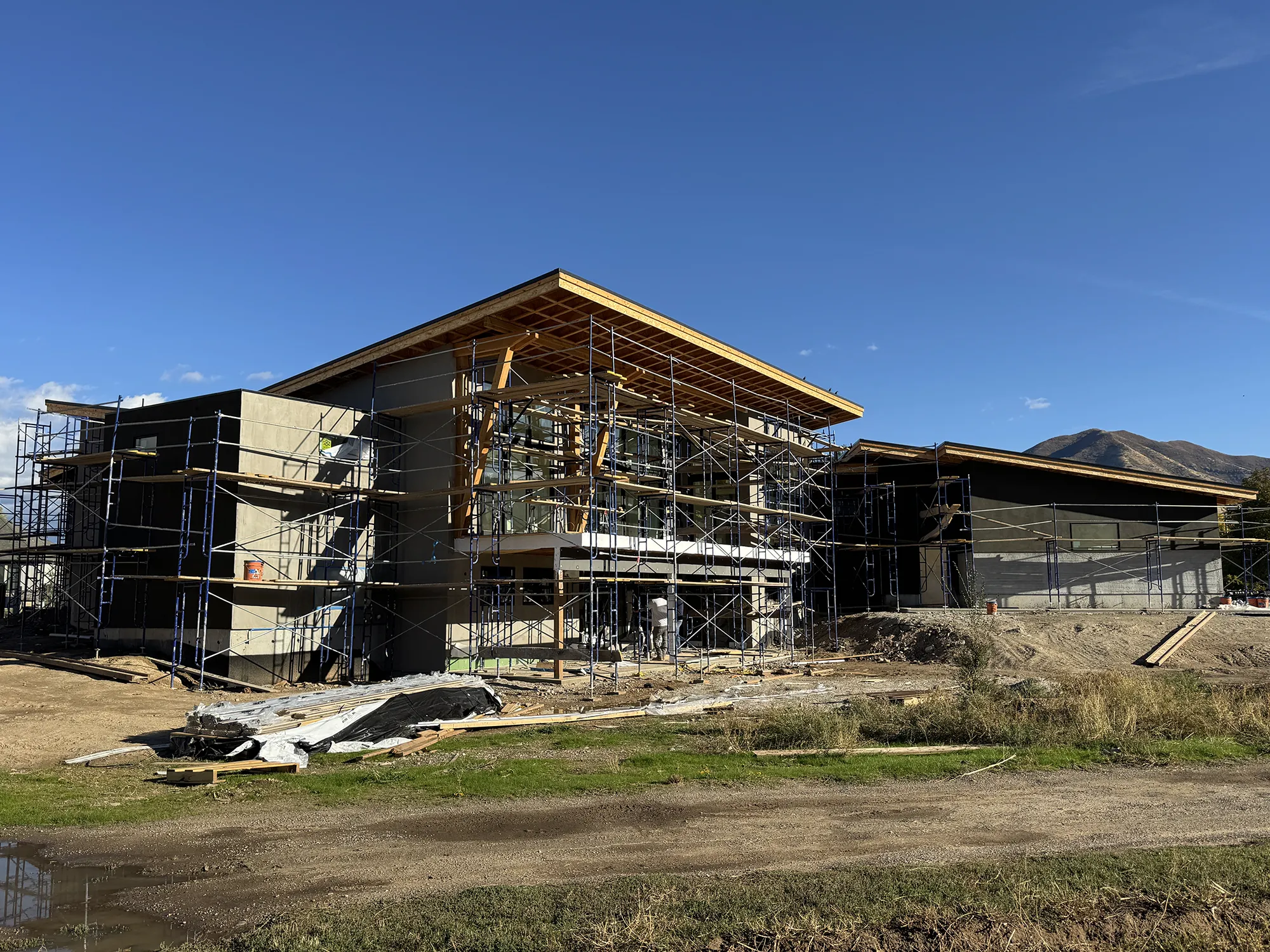
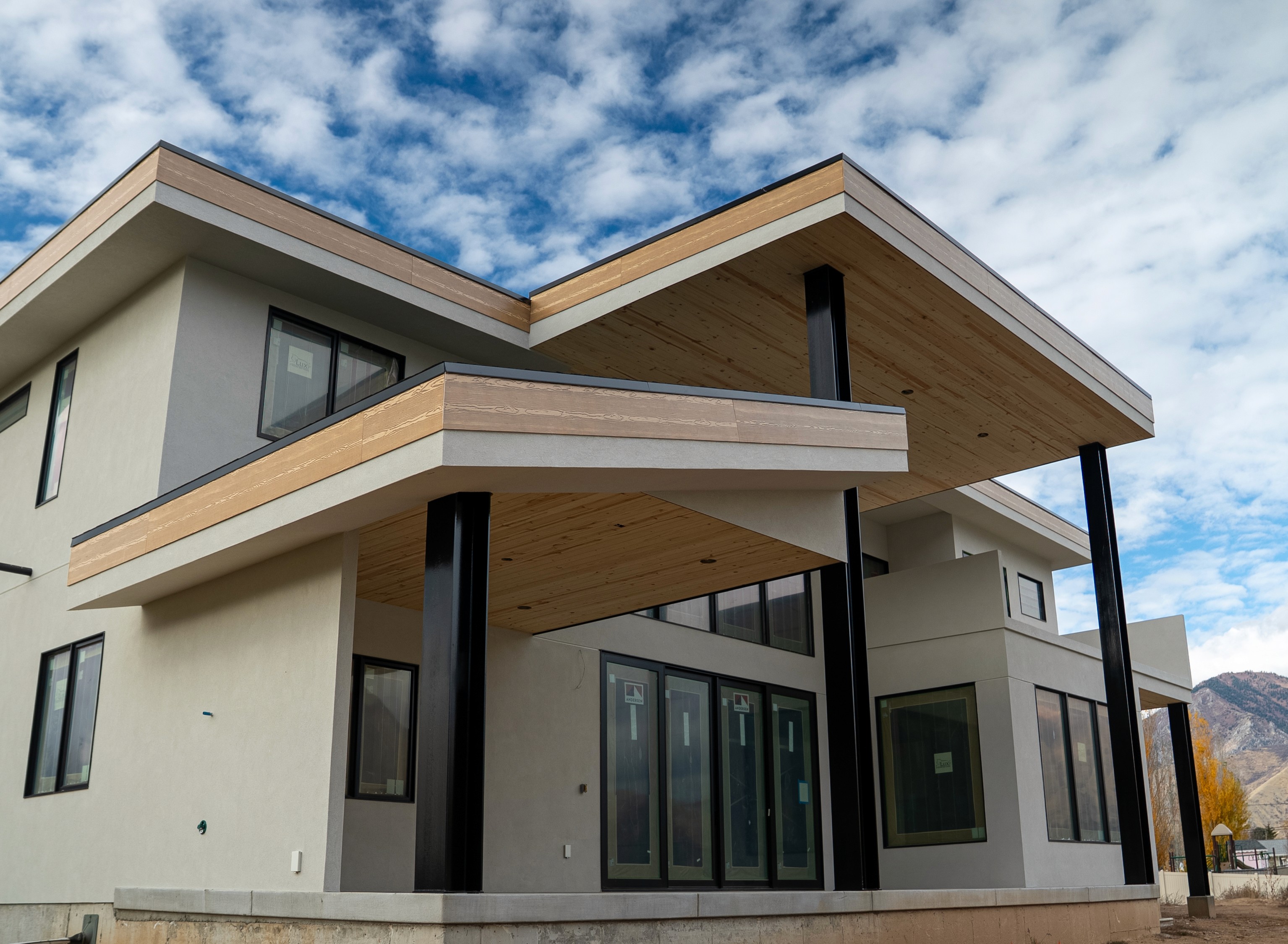
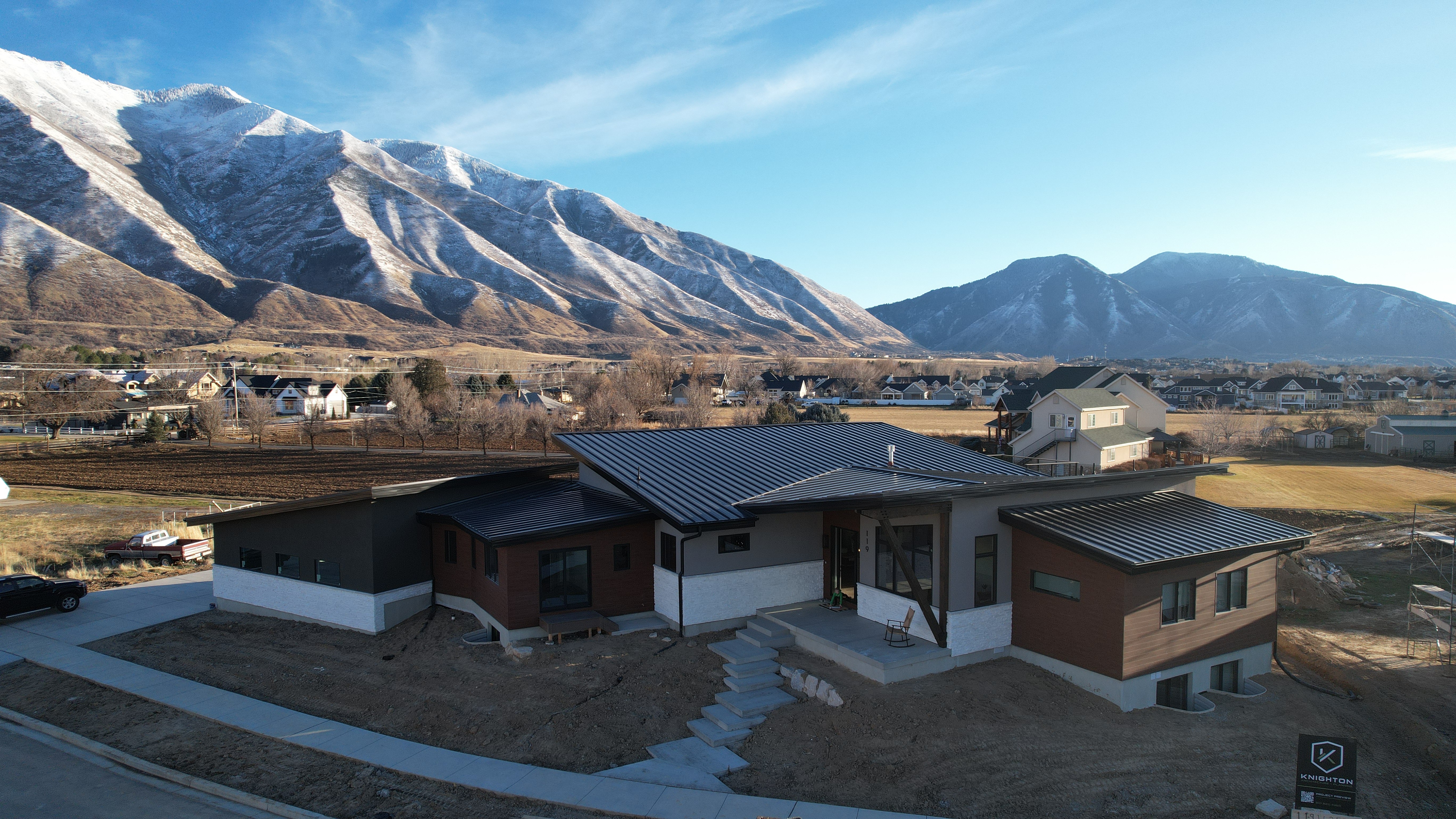
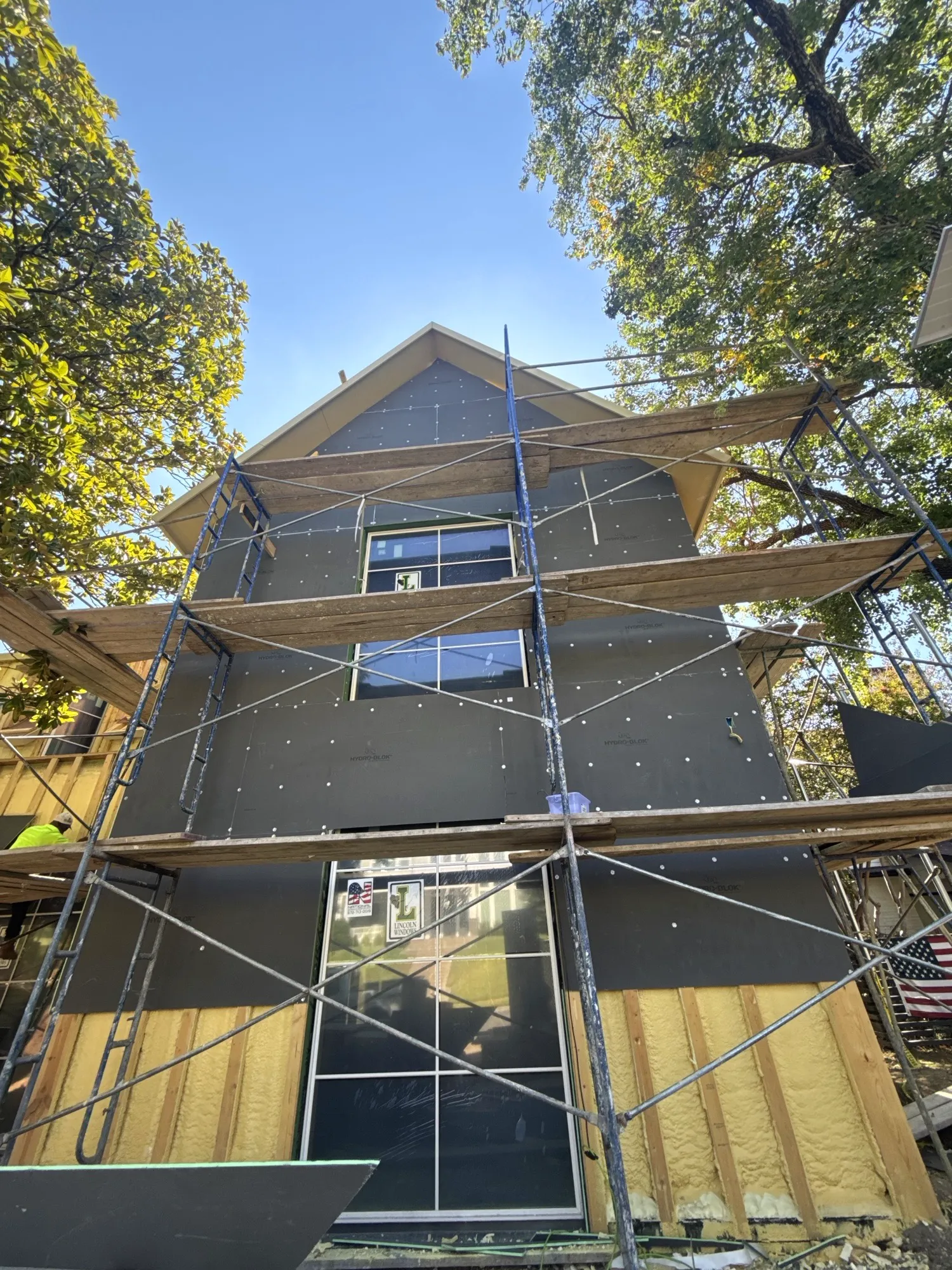
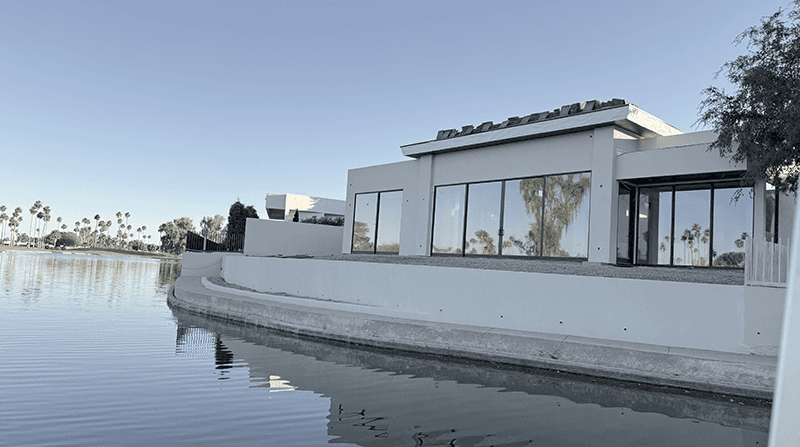
I recently learned about a new stucco substrate by HydroBlok (out of Draper, Utah) when Betsy Olson, a friend, neighbor, and owner of 3D Construction, LLC, here in Scottsdale, Ariz., used it when building her own home. Betsy noted that even the scratch coat—typically just a functional base layer—looked like a finished product. When exterior temps hit over 100°F, the interior remained at 72°F with no HVAC running, even with the garage door still open. The house became, in her words, “deafeningly quiet.” Having recently built my home in the same neighborhood using a drainable lath for the stucco assembly, I was immediately impressed by the speed of installation and by the incredibly flat, almost flawless execution of her stucco exterior.
Compared to conventional stucco systems, HydroBlok’s system affords faster installation and a smoother finish.
Product Details
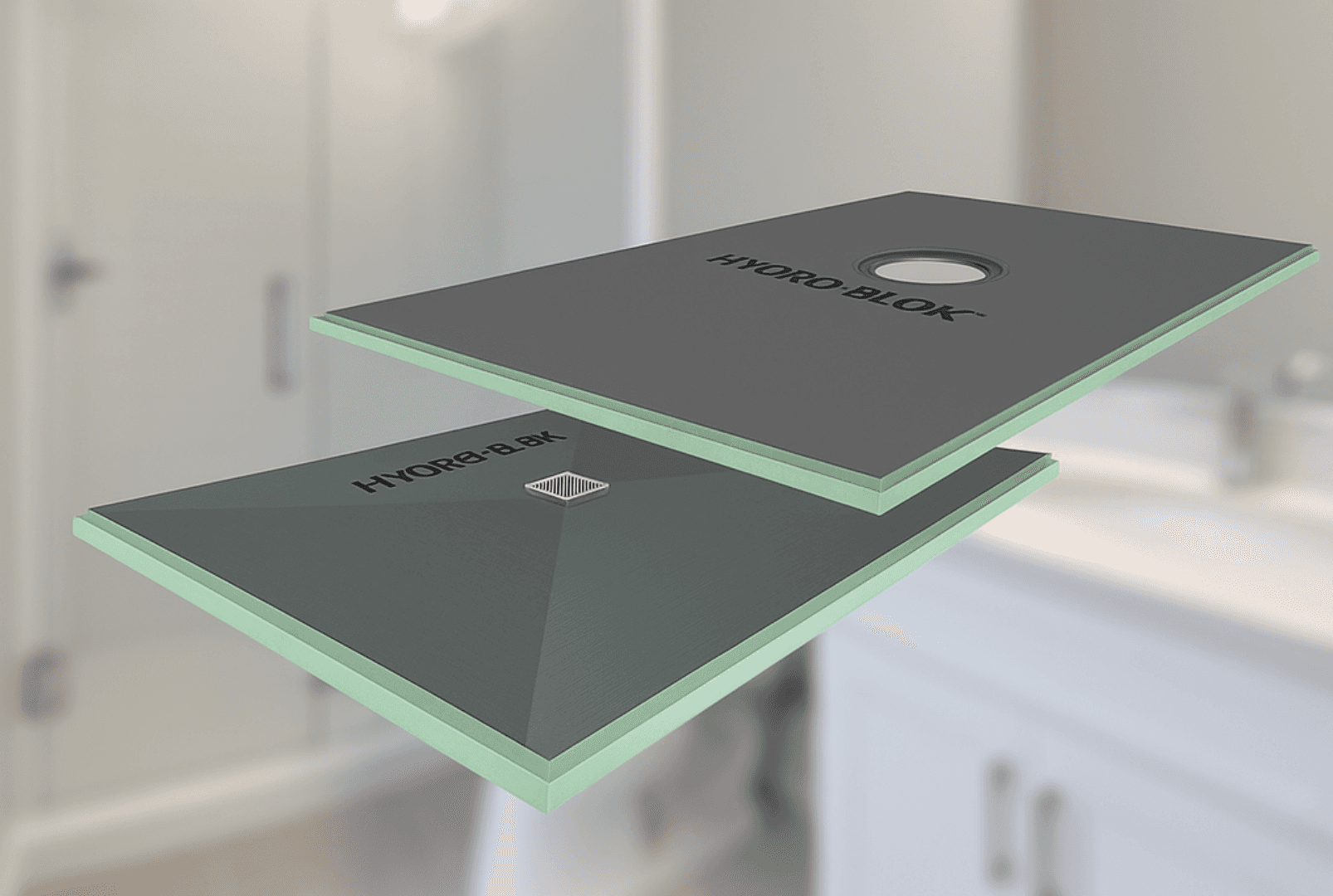
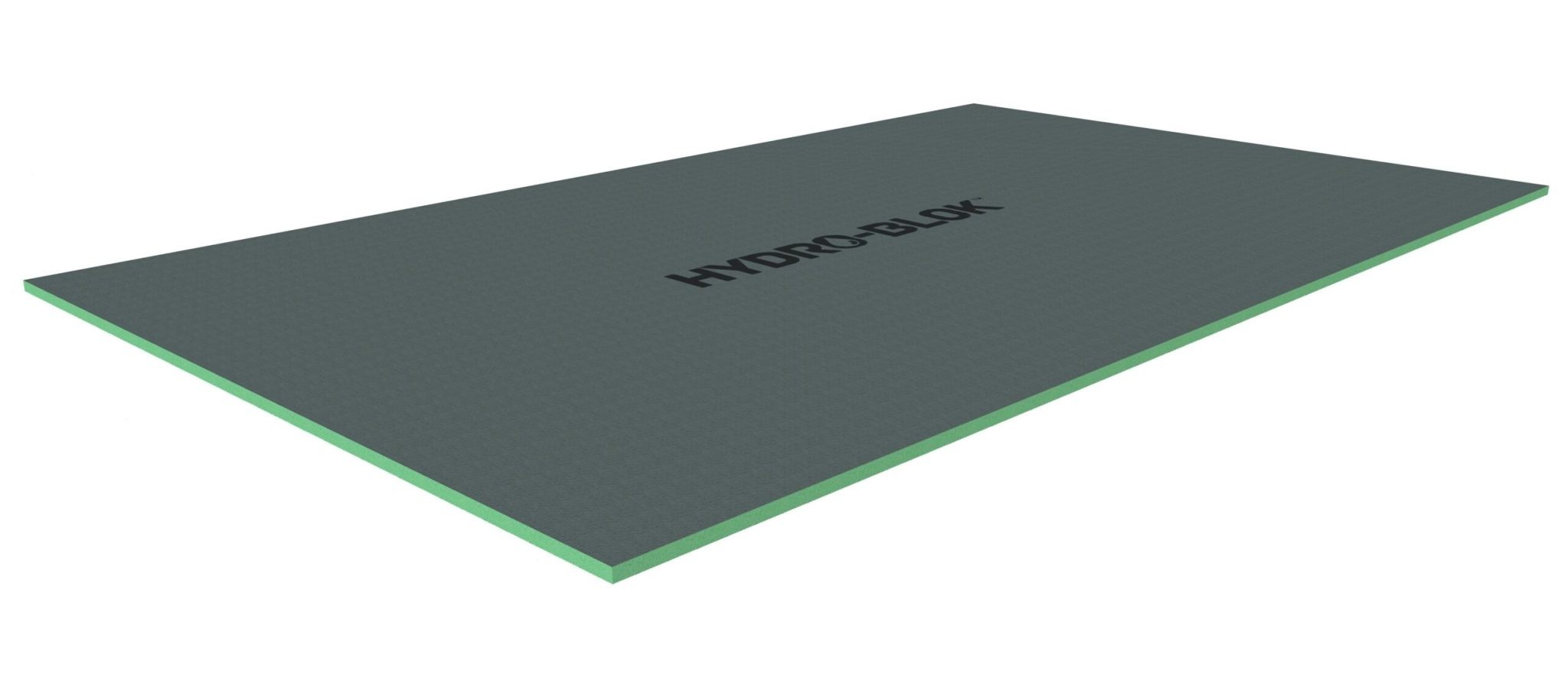
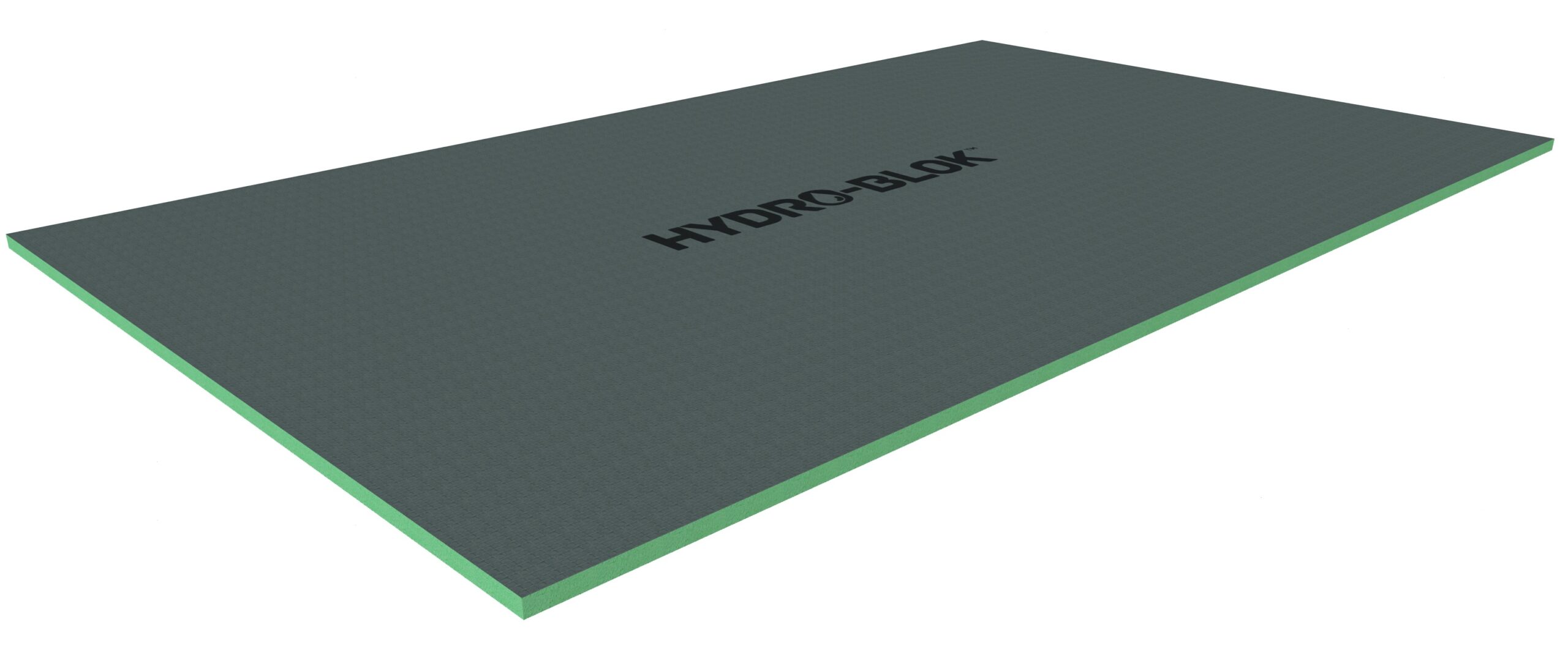
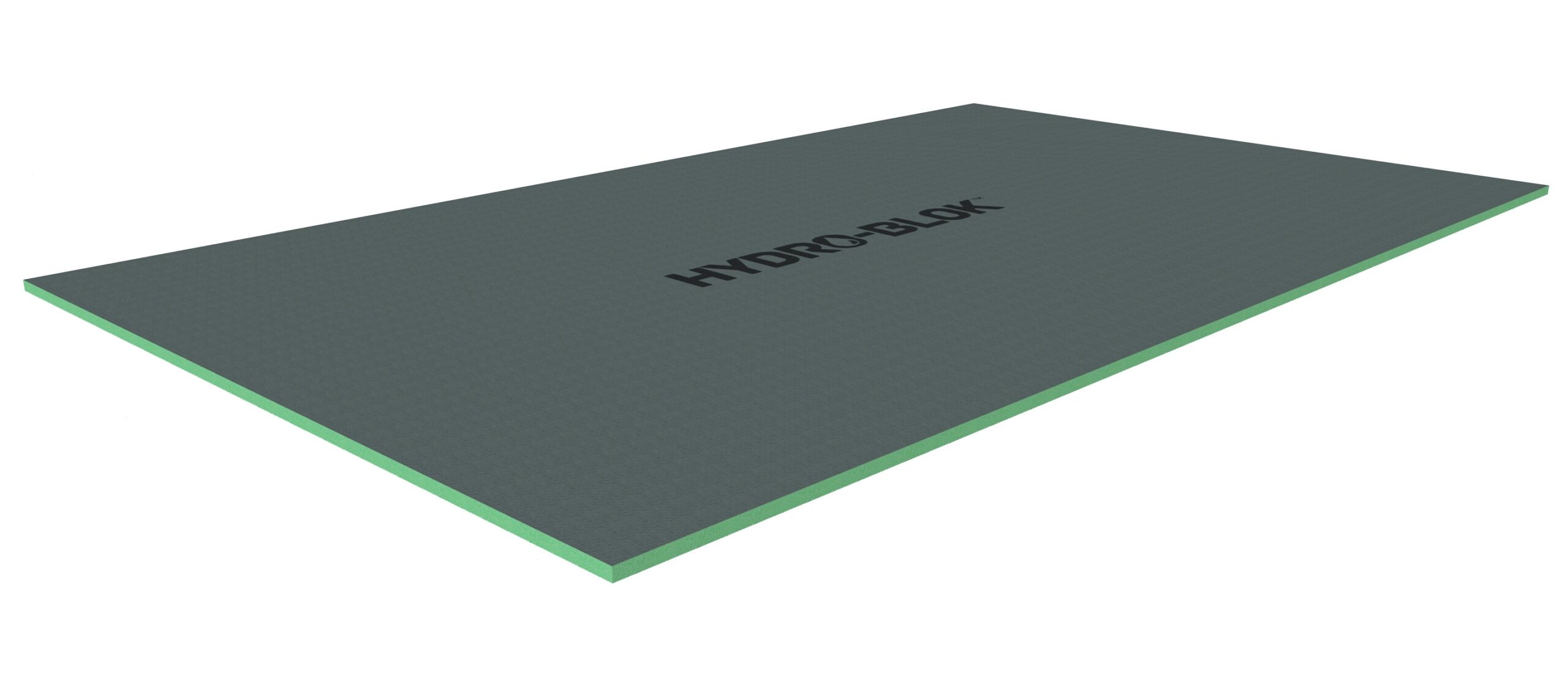
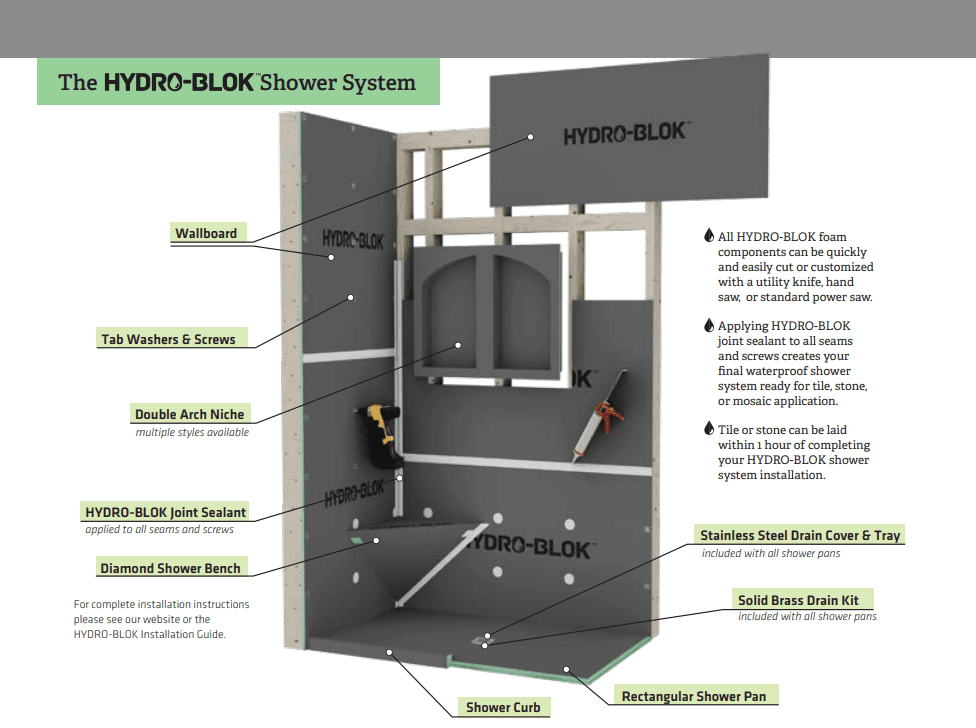
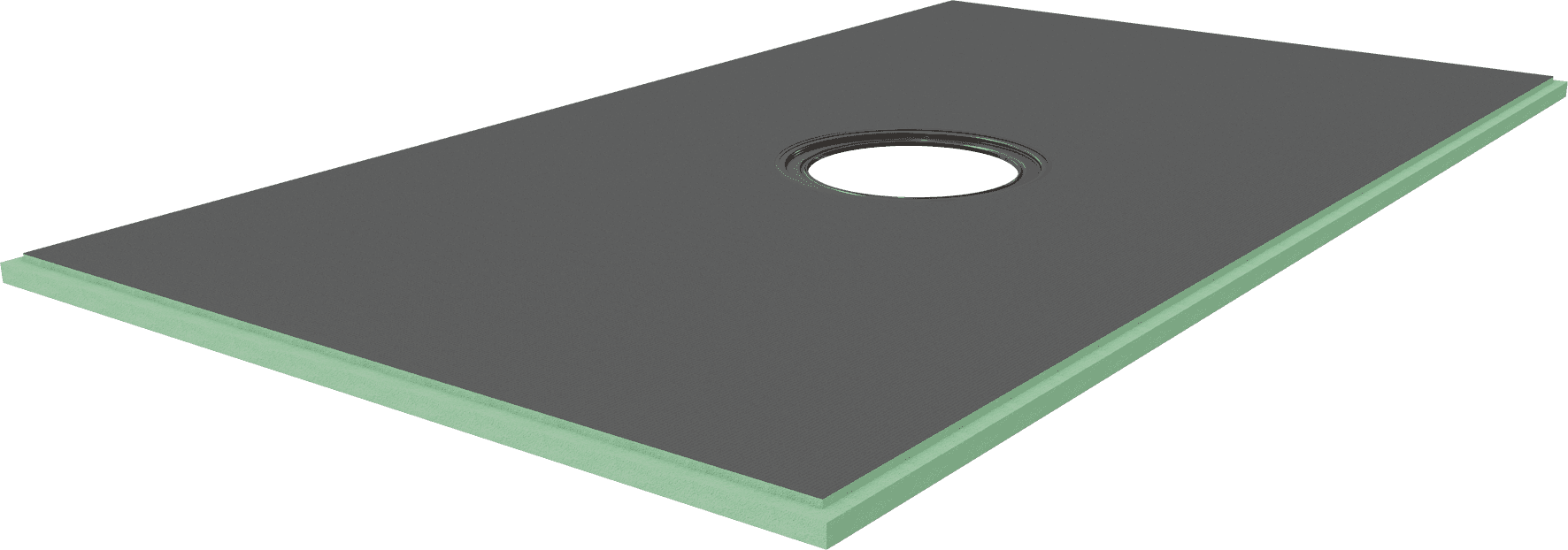
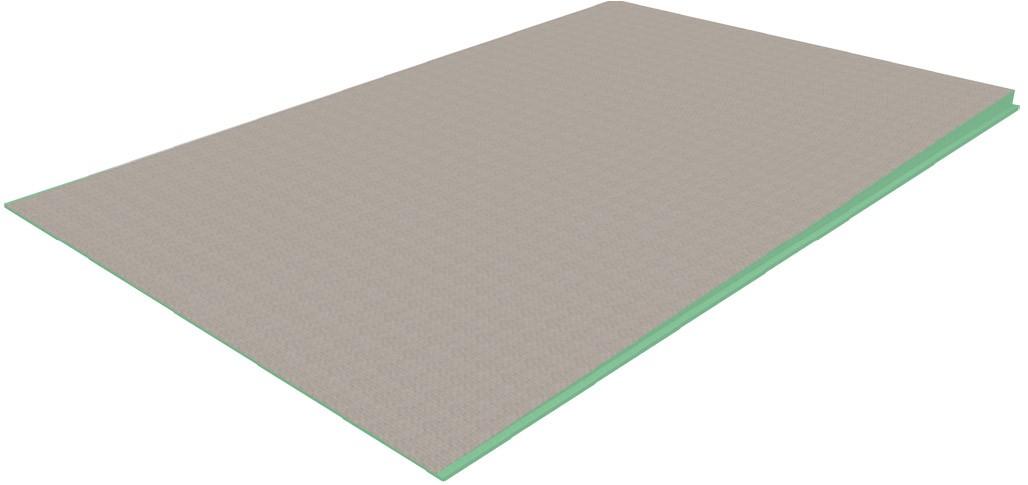
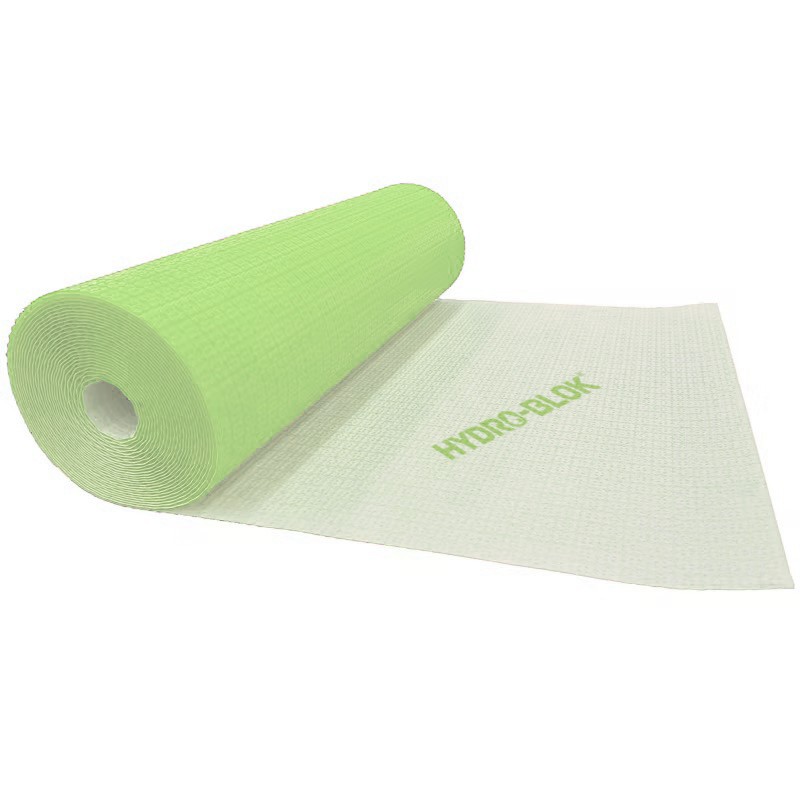
Hydroblok’s website (hydroblok.com) describes the new product as: “A water-resistance exterior backer board designed as a cement board and EIFS alternative for stucco applications.” The manufacturer took its existing tile substrate, HydroBlok Shower Systems, and evolved that product into a substrate for exterior stucco that they’ve named HydroBlok One Backer CI. As the name implies, it also functions as exterior continuous insulation (CI). As a substrate, the product eliminates the need for a chicken-wire or metal lath, so it can be installed super flat, and just as important, makes it easier to achieve a uniform thickness. The cementitious coating on the panels essentially serves as a scratch coat on which a polymer-modified base coat can be applied directly, followed by a top coat with an acrylic stucco finish. It will soon be approved for use with veneer manufactured stone.
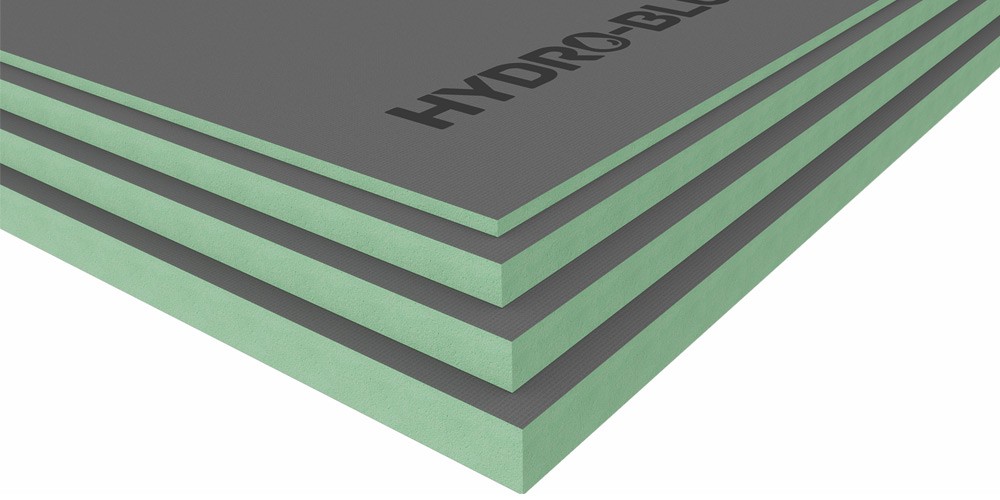
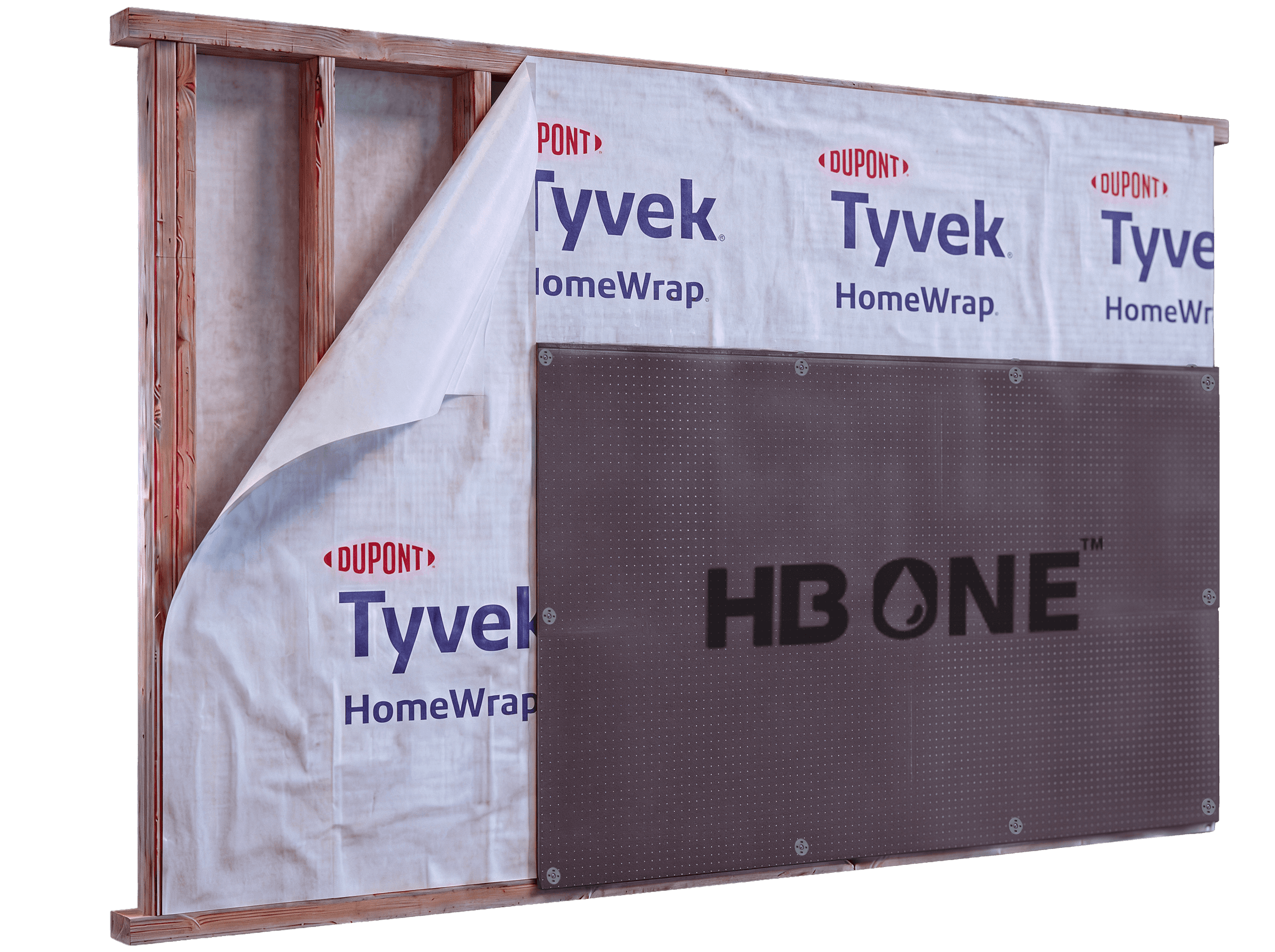
Backer CI combines four components into a single board: secondary WRB, continuous insulation, lath, and scratch coat. Fewer layers is always an advantage. Anytime you can eliminate layers, you eliminate potential mistakes and increase overall building performance.
The panels are made with a very dense extruded polystyrene foam insulation (available for CI applications in 1-, 1 1/2-, and 2-inch thicknesses at R-5, R-7.5 and R-10, respectively) that resists impact (a big plus in our neighborhood, which faces a golf course) and avoids the use of water-absorbing EPS foam. The foam is faced on both sides with a fiberglass mesh embedded in a cementitious coating, which lends the board incredible strength and serves as the bonding coat. The panels are also light; a 1-inch-thick 4×8 sheet weighs 28 pounds.
A Growing Market
Backer CI targets a growing market. According to data from the Census Bureau’s Survey of Construction, stucco overtook vinyl as the most common siding material on new, single-family U.S. homes in 2018 and peaked at 28% of the total U.S. siding market in 2021. Just last year vinyl siding nudged ahead by one percentage point, but stucco remains virtually neck-and-neck with vinyl. These numbers surprised me. I always knew stucco was super popular out here in the Southwest, but I was surprised that it is so common throughout the country.
In large part, this growth is probably indicative of the biggest building markets, which for many recent years have been in the Western states and in the Southeast. According to Zonda’s 2025 Local Leaders report, the top active markets for new-home construction (by new home starts and new construction share of listings) are in Texas, Arizona, Georgia, Florida, and Nevada—all states where stucco has been a common cladding material for decades. And, of course, there are regional differences. Stucco as a cladding material on homes leads in the Pacific (64%), Mountain (44%) and South Atlantic (33%) regions, whereas vinyl still dominates the siding market in New England (73%) and East North Central (69%) and Middle Atlantic (68%) regions.
Nevertheless, interest in stucco has slowly grown in regions where it wasn’t common in the past, due in part to shifting interest in new architectural styles. Over the last decade, the popularity of modern and contemporary home styles, which favor monolithic and minimalist exteriors, has grown steadily in all regions.
Partly, I suspect, the growth is also due to the increased use of polymer-modified synthetic stuccos, which don’t rely so heavily on a labor pool deeply rooted in the skills required for traditional three-coat stucco.
It’s important not to confuse this system with an “exterior insulation finish system,” or EIFS, like those introduced to the North American market from Europe in the 1970s. That introduction resulted in wide-spread failures in the 1980s and 90s because knowledge of the water management details that ensure the success of EIFS cladding was slower to migrate here than were the materials themselves. This transition and the proper details have been well documented in JLC (see “Success with EIFS,” by Russell and Michael Kenney, 11/01). But as knowledge of proper detailing has spread, and as the fear of EIFS failures has receded into the past, use of synthetic stucco has steadily grown. It remains a material that demands close attention to details to avoid failure, however, as evidenced by more recent JLC articles, such as “Synthetic Stucco Without Failures” (12/14) and “Trouble-Free EIFS” (11/22 and 12/22). Installing a synthetic
stucco assembly with Backer CI requires many of the same details, such as drainage wrap, flashings, and proper water management.
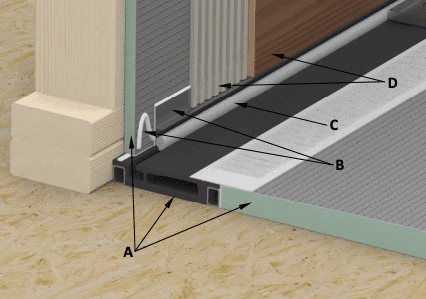
Backer CI is not a structural sheathing. According to the ICC Evaluation Services Report (ESR), it must be installed over a minimum ₁₅⁄₃₂-inch-thick Exposure-1-rated sheathing, or a minimum 5/8-inch exterior gypsum sheathing. Panels must be fastened through the sheathing into framing with #8 galvanized screws a minimum 1 5/8 inch long (0.164 inch diameter) and 1¼-inch-diameter galvanized washers every 16 inches on-center along panel edges and in the field. The ESR for stucco applications (see illustration, facing page) also specifies installing the panels over a drainable housewrap and specifically references Tyvek StuccoWrap.
A Path to Code Compliance
The fact that this new product acts as a stucco substrate and an insulation layer could make it a real time- and cost-saver for builders. The industry has seen an increasing use of continuous exterior insulation, largely driven by building energy codes. While CI has long been a prescriptive option to meet code, the 2018 version of the International Energy Conservation Code mandated only CI options for climate zones 6, 7, and 8. Options without CI were added back into the 2021 and 2024 versions for these climate zones, but these most recent code versions now include CI options for every climate zone.
Currently 25 states have adopted the 2018, 2021, or 2024 energy code, though several of the states that have adopted these code versions have amended them to reduce the R-value requirements or to include wall assemblies that don’t require CI. For example, New York State, which has adopted the 2018 edition of the model energy code, has amended the insulation requirements to allow R-23 wall cavity insulation without CI if the home also includes R-60 ceiling insulation; but if using R-49 ceiling insulation, builders must include CI (R-20+5 or R-13+10, where the first number reflects the cavity insulation R-value and the second number CI).
There are a wide variety of such amendments by states but the upshot is often the same: Use CI or go to greater lengths to achieve a higher R-value in cavity walls by using closed-cell spray foam, or, in the case of an R-30 wall, building a fat, double-stud wall. Increasingly, builders are recognizing that CI is often the most cost-effective solution.
Continuous insulation has a pretty dramatic effect on a wall’s overall thermal performance. If you’re building a 2×4 wall framed 16 inches on-center, for example, thermal bridging reduces the R-13 cavity insulation to R-11— about a 17% reduction. And if you’re doing 2×6 walls, thermal bridging reduces the cavity insulation from R-21 or R-23 to around 17—about 18% less. The Backer CI panels provide 31% greater R-value than a comparably sized, R-3.8 EPS panel.
Condensation control in colder climates is another critical reason for using continuous insulation. Exterior CI keeps the interior surface of the sheathing warm, reducing the chances that condensation can form on that surface inside the wall cavity. It’s important to emphasize that builders in climate zones 6 and above need to look at the vapor retarder requirements in Chapter 7 of the IRC. When using a Class III vapor retarder (such as latex paint on the interior surface of exterior walls as most builders are doing) and installing continuous insulation over a 2×6 wall in climate zones 6, 7, or 8, then the R-value of the continuous insulation that’s needed to control condensation is higher than the amount of insulation required to meet the prescriptive thermal insulation requirements.
Bottom Line
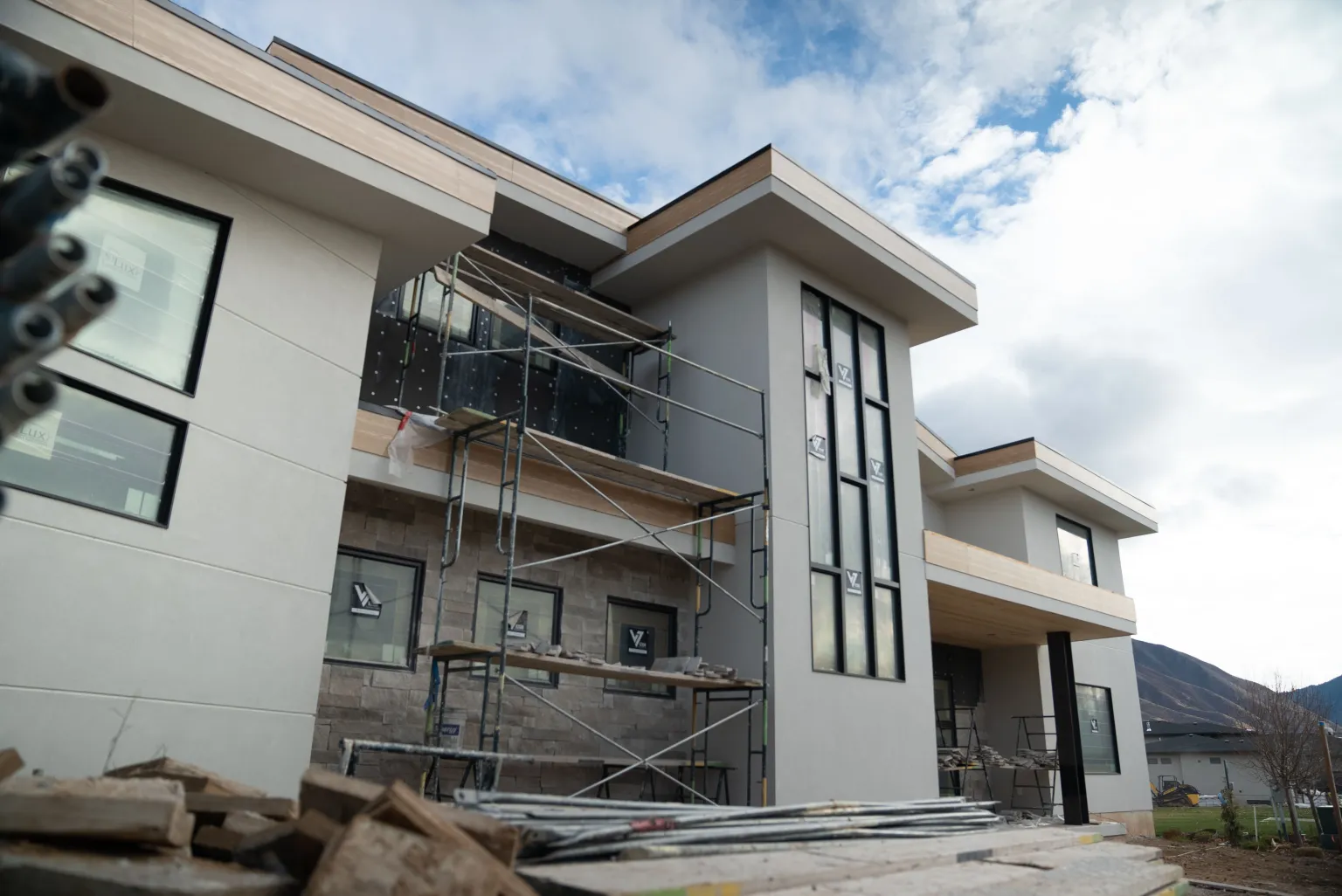
After researching this product, and watching crews install HydroBlok with synthetic stucco, my overall impression is that it requires fewer layers (and therefore less labor), allows a uniform thickness of the stucco and flatter walls, and provides a built-in path to meeting today’s energy code. Those qualities make it worth consideration for the next iteration of a time-tested cladding.
https://www.jlconline.com/how-to/exteriors/a-promising-new-stucco-solution